“I am not writing today as somebody who has gotten it right. I am not coming to you as a polished, cleaned‑up example of how to do this Christian life perfectly. Before I say one word about ‘the world’ and what our culture is doing, I need to tell you the truth about me.
I am standing here as a woman who has made choices that shattered people. I committed adultery by stepping out in a previous marriage. I broke a covenant. I am not proud of that. I am not telling you that for shock value or to make my story the headline; I am telling you because if I am going to talk about sowing and reaping, about God not being mocked, then I have to start with my own field. I cannot preach about sin like it is an abstract concept “out there” somewhere when I know exactly what it looks like to sow to my flesh and then stand in the middle of the harvest.
That choice, that adultery in my previous marriage, did not just affect me. It hurt people who trusted me. It hurt people who did not get to make that choice with me but had to live with the fallout anyway. I sowed seeds that grew into pain and distrust and brokenness. I opened doors in my own heart that took posture of repentance and Scripture and the mercy of God to even begin to close. My repentance not my parents, family, or friends repenting for me, but mine alone. And I still live with some of those consequences today.
And it is not just the sin from back then. I want to be honest about the society “respectable” sin that still try to live in me right now. That isn’t respectable. I wrestle with anger. I wrestle with being hot headed and quick to anger. My fellow brother in Christ calls these Parking lot moments. There are days when my first instinct is not to bless but to snap, not to forgive but to keep score. There are words I have spoken in my home, in my car, under my breath, that did not sound like Jesus. I have nursed grudges. I have replayed arguments. I have had whole imaginary conversations in my head where I “win.” That is also sowing to the flesh. That is also pride. That is also me saying to God, “I know better than You how this should go. I will handle my own justice.
So when we open the Word and read, “Do not be deceived: God is not mocked,” I do not get to stand on my stage and talk like that only applies to certain groups or certain headlines. I have mocked God with my life before. Not with my mouth, maybe—if you had asked me in the middle of my mess, I would have still said I loved Jesus—but with my choices.
“…I mocked Him when I decided that my desire, my anger, my need to be seen and validated, mattered more than His holiness, His Word, and the vows I had made.
So I need you to hear this clearly: I am not standing above you, swinging a Bible like a hammer. I am standing beside you, holding my own sins in the light, saying, ‘This is real. This is what it cost. This is what I had to bring to the cross.’ If you have stepped out in your marriage, if you have stolen, if you have blown up your life with anger, if you have sown lies or addiction, unspoken sins, or self‑righteousness, I am not talking to you as “those people.” I am one of you. The woman in John 8, caught in adultery and thrown at Jesus’ feet while everybody clutched their stones—that could have been me.
That story matters here. The religious crowd drags her in, quotes the Law, and basically says, ‘Jesus, what are you going to do about this sinner? The Law says we should stone her.’ And Jesus kneels down and starts writing in the dirt. We are not told what He wrote, but we are told what He said: ‘Let him who is without sin among you be the first to throw a stone at her.’ One by one, from the oldest to the youngest, the stones hit the ground and the crowd thins out. Finally, it is just Jesus and this woman. He asks, ‘Woman, where are they? Has no one condemned you?’ She says, ‘No one, Lord.’ And He answers, ‘Neither do I condemn you; go, and from now on sin no more.’
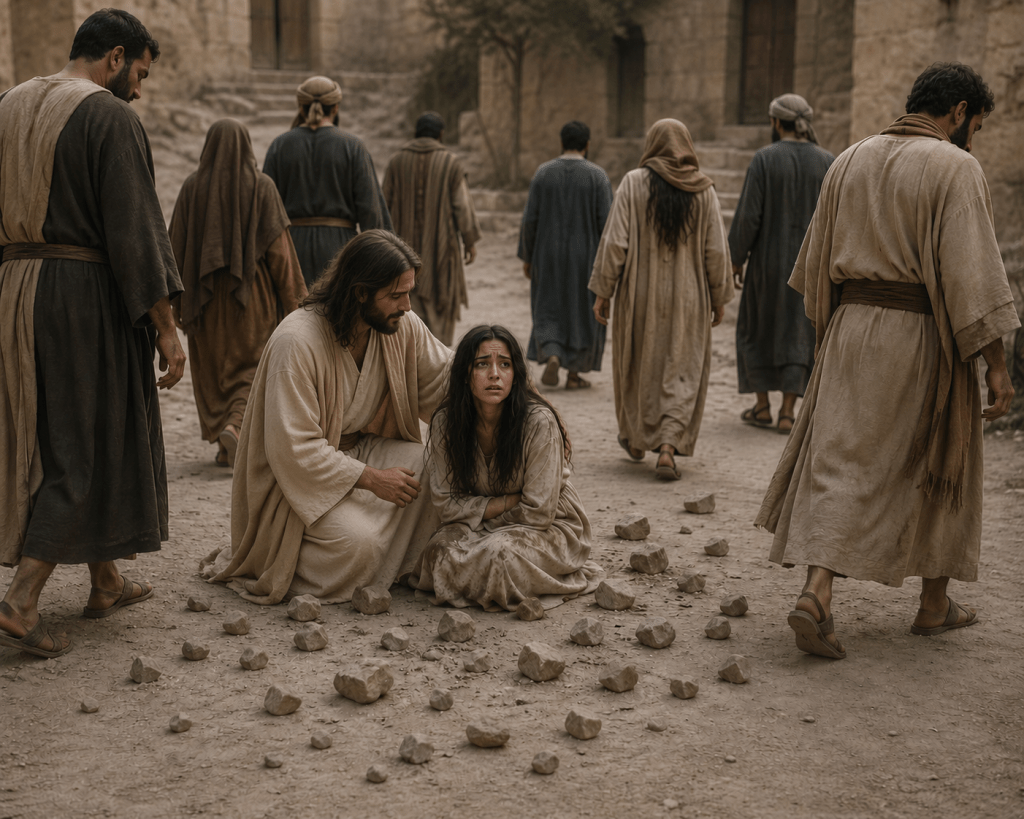
That is the posture I want. No stones in my hands, because I know my own record. But also, no pretending that sin does not matter, because Jesus did not say, ‘Neither do I condemn you, so go back and keep doing what you were doing.’ He said, ‘Go, and from now on sin no more.’ Mercy does not erase truth. Mercy invites us into a new way of living. Mercy says, ‘You are not crushed today, not because your sin was small or not sin, but because My grace is bigger. Now come with Me and leave that old life behind.’
And this is where our cultural moment gets so tricky. We are living in a time Isaiah 5:20 describes: ‘Woe to those who call evil good and good evil, who put darkness for light and light for darkness.’ We see it everywhere—people celebrating what God calls sin, mocking what God calls holy, twisting words like “love” and “freedom” until they mean the exact opposite of what Scripture says. It is easy, in a moment like this, to climb up on a high horse and start pointing fingers. It is easy to say, ‘Look at what they are doing. Look at how they are mocking God.’ But if I do that without first dealing with the sins in my own past, the anger in my own heart, the pride that still shows up in my own reactions, I am just another Pharisee standing in the circle with a rock.
But here is where we have to be very careful: a lot of what we are seeing right now, even among believers, is people picking up stones with their words. All of this hate and speech flying around on Facebook and social media, the name‑calling, the mocking, the “gotcha” comments—those are stones. They are not loving words. They are not the way Jesus talked to sinners. When we use our keyboards to humiliate people, when we pile on in the comments just to score a point, we are standing in the crowd with rocks in our hands. We may be quoting Bible verses while we do it, but we are not reflecting the heart of the One who said, ‘Neither do I condemn you. Go, and from now on sin no more.’
“Jesus told His followers, ‘You will be hated by all for my name’s sake’ and ‘If the world hates you, know that it has hated Me before it hated you.’ So I have to settle it in my heart that agreeing with Him will not make me popular. Following Jesus means there will be people who roll their eyes, call me hateful, or push me away simply because I will not call evil good. My job is not to water down what He said so people will like me better; my job is to stay faithful to Him, even when it costs me approval.” We will be hated… but that still doesn’t give us permission to throw stones.”
Isaiah 59 says, ‘Surely the arm of the Lord is not too short to save, nor His ear too dull to hear. But your iniquities have separated you from your God; your sins have hidden His face from you, so that He will not hear.’ That is not just a word to “them out there.” That is a mirror for me. My sins separated me. My stepping out in that covenant separated.
Galatians 6:7–8 says, ‘Do not be deceived: God is not mocked, for whatever a man sows, that he will also reap. For the one who sows to his flesh will from the flesh reap corruption, but the one who sows to the Spirit will from the Spirit reap eternal life.’ That is true for the obvious, outward sins we like to point at, and it is just as true for the hidden sins we excuse in ourselves. When I stepped out of the covenant of marriage—I reap broken trust, broken homes, broken hearts. When I sow anger and malice, I reap distance, fear, and fractured relationships. When I sow pride, I reap hardness and separation from God’s presence. And when I sow mercy, repentance, humility, and obedience, I reap life and peace, even if there are still scars from what came before.
So this is not a study about how ‘they’ are mocking God out there in the world and we are the good ones in here. This is a call to remember that every sin—big or small in our eyes—is a way of saying to God, ‘I know better than You.’ That is mocking God. This is a call to put the stones down, to step out of the Facebook comment wars, to stop trying to win arguments with cruelty, and to come back to the only place any of us can stand: at the foot of the cross.
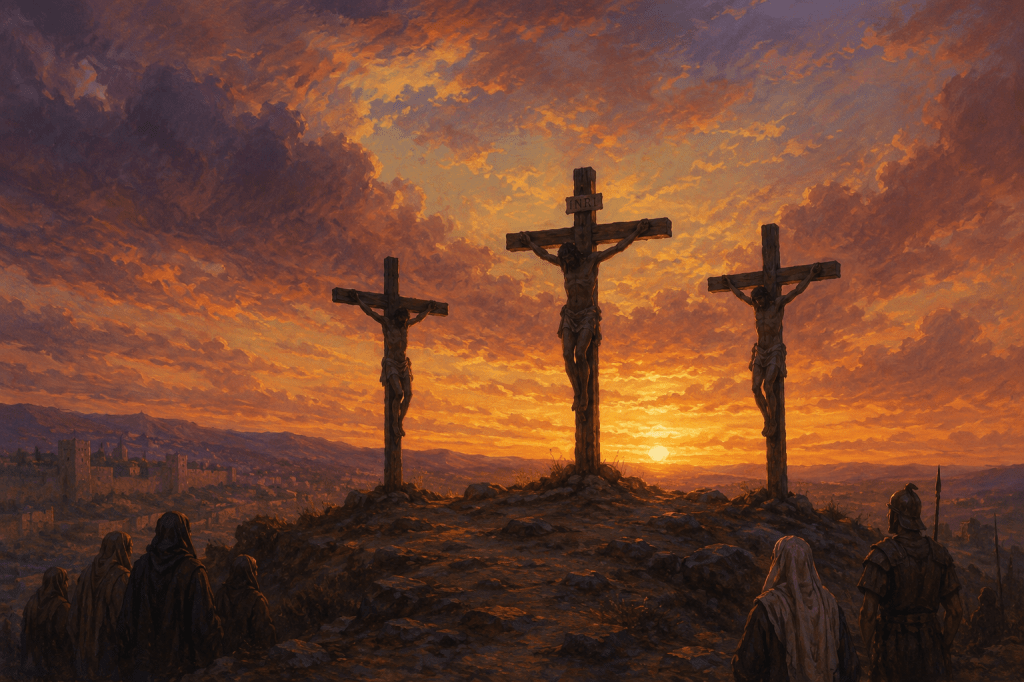
Jesus is not just my emergency bailout when I wreck my life. He is not just there to fix my finances, calm my anxiety, or clean up my reputation. He is Lord. He is Savior. He is the One who bled for every part of my story, and He cares about all of it—my body, my mind, my relationships, my past, my future, my scrolling thumb on Facebook, every ordinary Tuesday. He is not a slot machine I run to when I want something; He is the King who invites me to lay everything down and find real life in Him. And if you belong to Him, the same blood that has covered my past sins, my anger, and my pride is the blood that covers your sin too. The cross is not lighter for me and heavier for you. It is the same rugged cross, the same poured‑out mercy, offered to every single one of us who will lay down our pride and come.
And here is the hope that keeps me from drowning in all of this: Lamentations 3:22–23. ‘Because of the Lord’s great love we are not consumed, for His mercies never come to an end; they are new every morning; great is Your faithfulness.’ If His mercies were not new, my story would have ended in my sin. If His compassion failed, my past adultery and my anger and my pride would have been the last word. But they are not. The last word over my life is the mercy of God in Christ. That is the only reason I can talk about any of this. That is the only reason I can face what I have sown and still get up and walk in a new direction.
So when I say, ‘God will not be mocked,’ I am not pointing a finger at you and shouting from a distance. I am standing beside you, pointing at the cross, saying, ‘Let us not be deceived. Let us stop sowing to the flesh. Let us lay down our pride, our stones, our social‑media hate, and come back again to the mercy that is somehow still new this morning.’ “That is not bad news; that is the best news I know—because it means today, again, I can trade in what I have sown in my flesh for what He has sown in His blood.” ☀️ Sunnye Anne


Leave a Reply